

Majority of the students who sit the IELTS test hopes to pass first time. Unfortunately, the sad truth is that not everybody does, in fact only around 11% of the students in India manage to achieve a 7 Band.
So, what do you do when you don’t get the band scores you need? To be honest, there is no magic answer here, but here are our 5 Steps To help you to recovery.
1. Give yourself time to be angry and upset.
You just got your results and found out you have failed to get the target score. You feel you worked hard. You spent time, money and effort preparing, but now you’re back to square one.
It’s OK! Go ahead and allow yourself to be angry and disappointed for a few days. After that, look at the score of each test. Did you at least achieve your goal in some tests? If you did, keep up with your excellent work. If not, it is very important to know what went wrong and how to improve.
2. Don’t punish yourself
Why? Well, because IELTS is hard and in most countries the average score for students is 6.0 – 6.25.
Do you also know that to migrate to Canada you need CLB9 (8777), that means you need a score that puts you in the top 5% of all test-takers worldwide, and in India it would put you on the top 3% of all the test-takers – these are HARD scores to get (particularly for writing and speaking).
More importantly, NEVER let yourself or anybody make you feel ashamed for not getting the IELTS score.
3. Now examine why you failed the IELTS test?
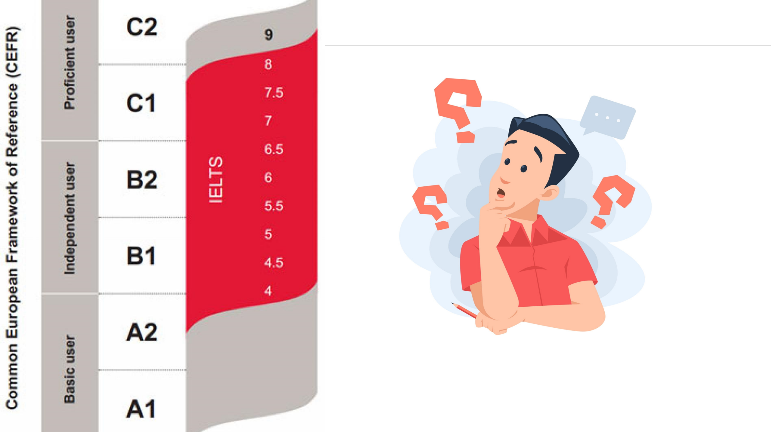
The next step is to evaluate yourself honestly. If you got an average score of 6.5 or 7.0 and you need 8777, then the truth is that right now your current level of English is B2 level, which just isn’t high enough to sit again immediately.
Don’t despair, don’t waste money on another test, and don’t start practicing again. Instead find a good English teacher to help you study general English before you try again.
Think carefully about why you missed out this time and
- Did you have a negative or positive attitude whilst preparing for IELTS exam.
- Did you calm yourself before starting your test?
- Did you apply your core and micro skills of English language?
- Did you have relevant ideas for the essay question?
- Did you write off-topic in writing Task 2?
- Did you only focus on scanning/skimming in reading test?
- Were you stressed towards to end of test?
- Did you get a tough topic for Speaking Part 2 and/or Part 3?
If you had a negative attitude and didn’t get your score, then it’s time to seek help from a professional English teacher, as there is no point booking another test until you know that you have fixed the problems from your previous test, as you are unlikely to achieve your target score.
If you ONLY have problems with writing or speaking, it is time to get professional help. A good English teacher will be able to analyse your performances and tell you exactly where you’re going wrong.
We at ieltsclasses provide this service for writing, that pinpoints exact area of your weaknesses.
4. Set yourself on proper track
It is never a good idea to keep repeating the IELTS test again and again until you address the problems from your previous test.
Because it means you will end up wasting more money, time, and effort – leading to the road of depression, and finally giving up on IELTS!
Focus on getting up and improving your skill, particularly the micro skills.
We offer comprehensive courses, including building your language skills and to arm you with the right skills needed to tackle the IELTS exam effectively. Contact us for more details.
5. Try again
Think of IELTS like riding a bicycle – everybody falls off the bike first time they try to ride, but most people who are determined enough will finally be able to balance and ride the bicycle.
So, learning to balance on the bicycle is to focus on improving your language skills, which would make it a lot easier to ride (achieving your target score).
6. Make an Action Plan
Take a break if you’re feeling tired and depressed by your IELTS journey, then make a study plan is by using your answers from the assessment of why you failed. This information can then be transferred into a study plan.
For example, you can create a plan shown below:
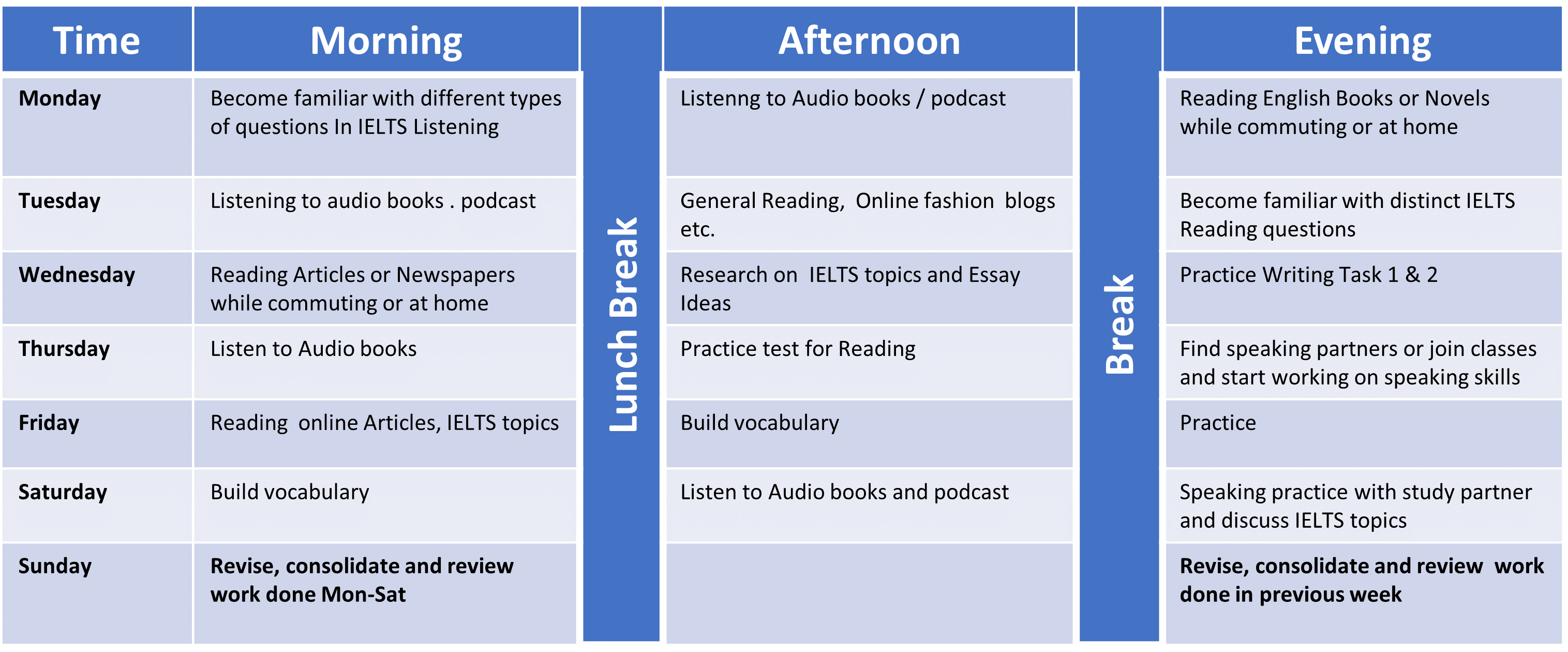
REMEMBER – It’s important that your action plan suits your needs and weaknesses. The one shown above is just an example.
If you follow these steps, then hopefully you will get the band score that you desire and bring back joy in your life!
Good Luck